

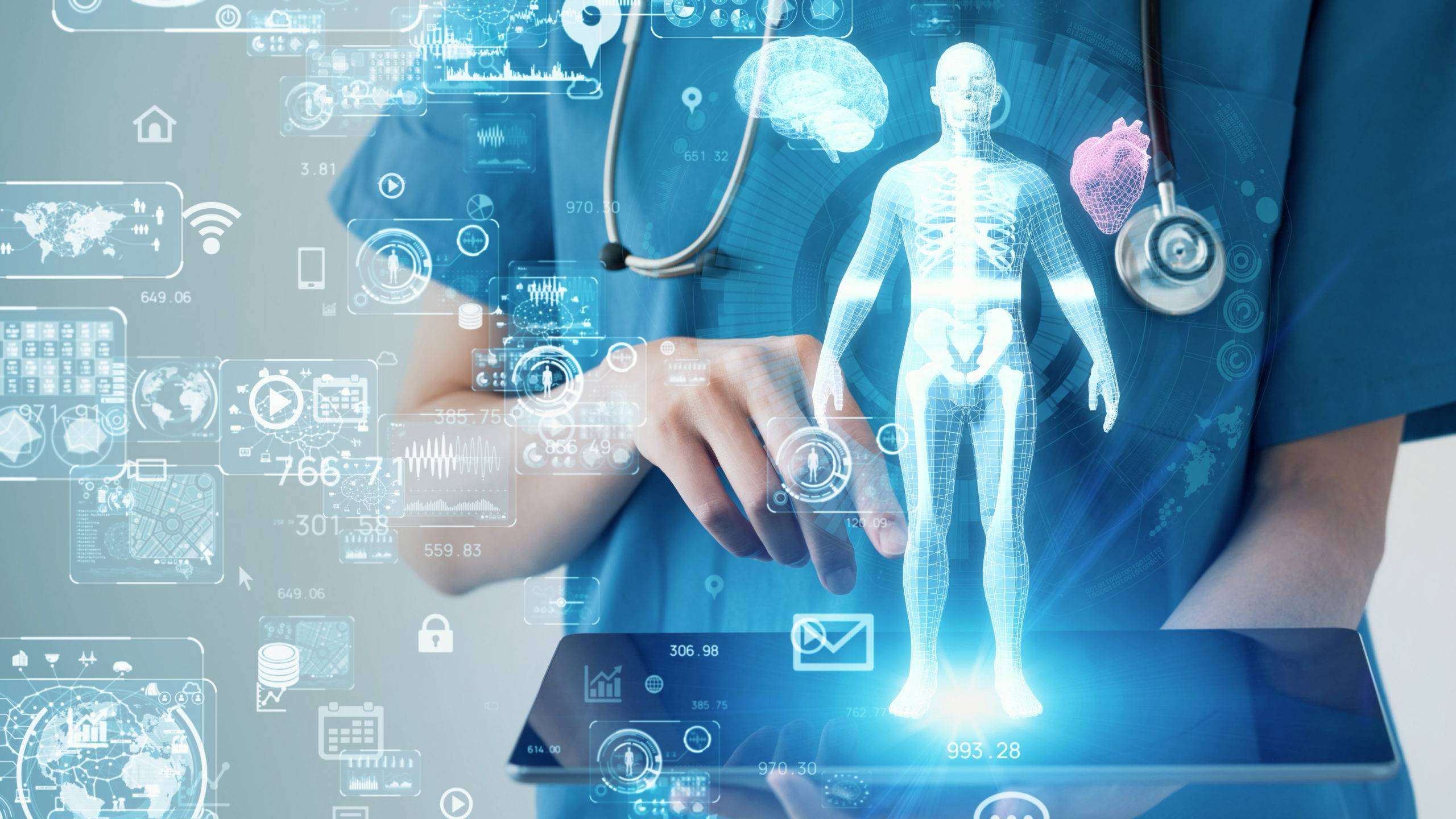
This week’s edition of the Traveler’s Guide to Nursing and Allied Health explores how artificial intelligence and technologies are impacting and changing healthcare.
Self-driving cars, facial recognition, marketing chatbots−artificial intelligence, and evolving technologies have infiltrated every part of our lives. They monitor our sleeping habits, guide us to our destination, and, if we’re lucky, help us find true love. Tools and technology which used to exist only in science fiction are now transforming the work of nurses and allied health and enhancing patient care. As healthcare workers struggle with the challenges created by staffing shortages and burnout, clinical decision support, mobile health, sensor-based technologies and more will be key to alleviating burdens and optimizing care.
Mobile and Sensor-Based Technologies

Wearable fitness trackers have evolved into personal health databases updating users on their heart rate, blood oxygen levels, respiratory rate, and more. These technologies are especially useful for managing chronic illnesses, which along with mental health conditions, account for 90 percent of the nation’s $4.1 trillion in annual healthcare expenditures according to the CDC. Patients can track and share valuable data with healthcare providers to enhance diagnosis and care.
Clinical Decision Support
Manual calculations are time-consuming and subject to human error. Clinical decision support provides timely, patient-specific information enhancing clinician decision-making and accelerating the process for improved patient outcomes. Medication alerts, order sets, electronic health records, best practice notifications, and health maintenance reminders all support a nurse’s ability to review and select the best option based on data. CDS can be used on various platforms and integrated with tools such as mobile health applications and electronic health records. Though the 21st Century Cures Act exempted some systems from FDA regulation, the September 2022 final guidance on CDS expanded which predictive tools could be regulated as medical devices.
Virtual Nursing Assistants

Telemedicine exploded during the COVID-19 pandemic when healthcare workers couldn’t see patients in person and technology expanded notions of care delivery. Though in-person care will always provide the most comprehensive patient assessment, telemedicine and virtual options are vital tools in alleviating workload and streamlining care. Virtual nursing assistants and virtual nursing allow healthcare workers to interact with patients remotely and update health conditions, make appointments, and identify and assess the severity of conditions. This technology helps provide a more flexible caretaking experience, and as it becomes more integrated with other tools, such as mobile devices, will help improve overall care.
AI Data Analytics
One of the top artificial intelligence applications used in healthcare is data analytics. Healthcare workers are tasked with reviewing electronic health records, lab results, patient files, and more. AI can analyze large amounts of data to enable nurses and others to make better decisions. Predictive models identify high-risk patients and suggest the best treatment. Eventually, AI will provide real-time information and recommendations.

AI Assisted Drug Development
Developing new drugs is timely and expensive. AI removes much of the human guesswork and expedites the process. AI enables researchers to examine vast amounts of data to identify what works, what’s safe, cheaper, and easier to make, and helps researchers prioritize and design more effective trials speeding up development.
Additionally, AI algorithms, which analyze CT scans, MRIs and can develop 3D models of patient’s anatomy are improving surgical procedures and outcomes.
AI and evolving technologies are rapidly changing our lives. The long-term success of these technologies in healthcare is dependent on nurse and allied health professionals input. Frontline workers must be included to ensure the long-term success of these technologies in improving the total healthcare experience.
MPX+
Are you a Registered Nurse or Allied Health Professional looking to work and travel in the U.S.? With MedPro’s all-new MedPro Experience+ (MPX+), travel nurses and allied health professionals are taking control of their careers. MPX+ puts the power in travelers’ hands. Users have 24/7, real-time access to jobs, applications, credentials, assignment details, and more. Sign Up for MedPro Experience + today!
And download the APP at Google Store: https://lnkd.in/esAmN5MM or iPhone App Store: https://lnkd.in/eUuEJmXt