



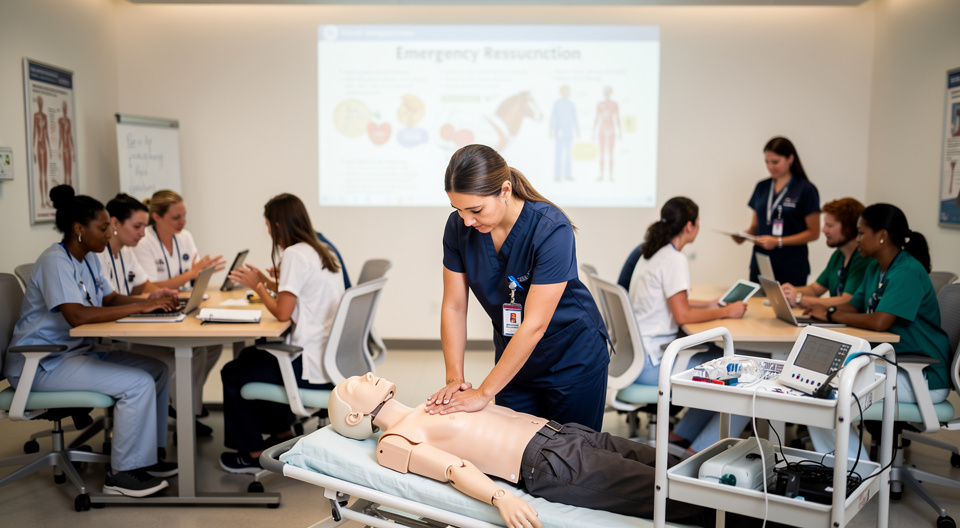
Emergency nursing isn’t exactly predictable. One shift might bring a cardiac emergency, the next a trauma patient, and five minutes later you’re helping care for a pediatric patient.
That’s why ER nurses need a broad clinical skill set—and the right certifications can help you build on that experience.
Some credentials may be required by a facility, while others can strengthen your emergency nursing knowledge or help prepare you for specialized roles. If you’re an experienced ER nurse considering travel nursing, keeping your certifications current can also help you stay ready when the right assignment opens.
Here are eight certifications and courses ER nurses should know about.
1. Certified Emergency Nurse (CEN)
If emergency nursing is your specialty, the Certified Emergency Nurse (CEN) credential is one of the most relevant certifications to consider.
Offered by the Board of Certification for Emergency Nursing (BCEN), the CEN validates knowledge across major areas of emergency nursing.
The exam covers topics including:
- Cardiovascular emergencies
- Respiratory emergencies
- Neurological emergencies
- Trauma
- Medical emergencies
- Behavioral health
- Professional practice
While CEN certification isn’t required for every ER nursing position, earning it can demonstrate your commitment to the specialty and continued professional development.
Good fit for: Experienced nurses who plan to continue building their careers in emergency nursing.
2. Trauma Nursing Core Course (TNCC)
Trauma can arrive in the ER at any moment.
The Trauma Nursing Core Course (TNCC), developed by the Emergency Nurses Association (ENA), helps nurses strengthen their approach to assessing and caring for trauma patients.
Training focuses on areas such as:
- Rapid patient assessment
- Identifying life-threatening injuries
- Trauma interventions
- Prioritizing care
- Team communication
For ER nurses working in trauma centers—or considering travel assignments at facilities that frequently handle trauma—TNCC can be especially valuable.
Good fit for: ER nurses who regularly care for trauma patients.
3. Advanced Cardiovascular Life Support (ACLS)
Cardiac emergencies are part of life in the ER, making Advanced Cardiovascular Life Support (ACLS) an important credential for many emergency nurses.
ACLS builds on basic life support skills and covers topics such as:
- Cardiac arrest
- Arrhythmias
- Airway management
- Stroke
- Acute coronary syndromes
- Emergency medications
- High-performance resuscitation teams
ACLS is commonly required for ER nursing positions, so keeping your certification current is especially important if you’re planning your next travel assignment.
Good fit for: Most ER nurses and nurses working in higher-acuity settings.
4. Pediatric Advanced Life Support (PALS)
Not every emergency patient is an adult.
Pediatric Advanced Life Support (PALS) prepares healthcare professionals to recognize and respond to serious pediatric emergencies.
Training includes:
- Pediatric assessment
- Respiratory emergencies
- Shock
- Cardiac arrest
- Resuscitation
- Post-resuscitation care
If your emergency department treats pediatric patients, PALS may be required or preferred depending on the facility.
Good fit for: ER nurses who care for pediatric patients.
5. Emergency Nursing Pediatric Course (ENPC)
Want to take your pediatric emergency knowledge further?
The Emergency Nursing Pediatric Course (ENPC) from the Emergency Nurses Association focuses specifically on emergency care for pediatric patients.
The course helps nurses strengthen skills in:
- Pediatric assessment
- Identifying serious illness or injury
- Emergency interventions
- Family-centered care
- Pediatric-specific clinical considerations
For ER nurses who frequently work with children, ENPC can complement PALS with a broader emergency nursing perspective.
Good fit for: Nurses working in emergency departments with significant pediatric patient populations.
6. Basic Life Support (BLS)
It may be one of the most familiar certifications on this list, but don’t overlook it.
Basic Life Support (BLS) is foundational for healthcare professionals and is commonly required for nursing positions.
BLS training covers:
- High-quality CPR
- AED use
- Recognition of cardiac arrest
- Team-based resuscitation
- Response to choking
For travel nurses, keeping BLS current is important. An expired certification can create unnecessary delays during the compliance process for your next assignment.
Good fit for: Every ER nurse.
7. NIH Stroke Scale (NIHSS)
ER nurses are often among the first healthcare professionals involved when a patient arrives with possible stroke symptoms.
The NIH Stroke Scale (NIHSS) provides a standardized method for evaluating neurological impairment in patients experiencing an acute stroke.
Training can help nurses strengthen their ability to assess areas such as:
- Level of consciousness
- Motor function
- Language
- Vision
- Sensory function
- Facial movement
NIHSS training may be particularly valuable for nurses working in stroke centers or facilities that frequently treat neurological emergencies.
Good fit for: ER nurses who regularly assess patients with suspected stroke.
8. Certified Flight Registered Nurse (CFRN)
This one isn’t necessary for the average ER nursing position—but it’s worth knowing about if flight nursing is where you want your career to go.
The Certified Flight Registered Nurse (CFRN) credential, also offered by BCEN, is designed for nurses working in flight and critical care transport environments.
Flight nurses may care for critically ill or injured patients while dealing with the unique challenges of providing care during air transport.
The credential is best suited for experienced nurses who already have a strong background in emergency or critical care nursing and want to move into transport nursing.
Good fit for: Experienced ER or critical care nurses interested in flight nursing.
Which Certifications Do Travel ER Nurses Need?
There isn’t one universal certification checklist for every travel ER nursing job.
Requirements can vary based on:
- Facility
- Trauma designation
- Patient population
- State
- Assignment
- Unit expectations
BLS and ACLS are commonly requested, while certifications or courses such as PALS, TNCC, ENPC, and NIHSS may be required or preferred for certain positions.
Before submitting for an assignment, review the job requirements with your recruiter and make sure your certifications are current.
That’s especially important in travel nursing, where opportunities can move quickly.
Don’t Wait Until Your Certification Expires
Nothing puts the brakes on an exciting opportunity quite like realizing one of your credentials is about to expire.
If you’re actively searching for your next assignment, check your certification dates ahead of time.
Keep digital copies of your:
- Nursing license
- BLS
- ACLS
- PALS
- TNCC
- ENPC
- NIHSS
- Specialty certifications
Having everything organized and ready can make the submission and compliance process much smoother.
Build Your ER Experience. Then Take It Somewhere New.
ER nurses know how to think quickly, adapt when priorities change, and stay focused when things get busy. The right certifications can build on that experience and help you continue growing within your specialty.
And when you’re ready for a change of scenery, those skills can travel with you.
MedPro Healthcare Staffing connects experienced ER nurses with travel nursing opportunities across the country.
Ready to see where your ER experience can take you?