

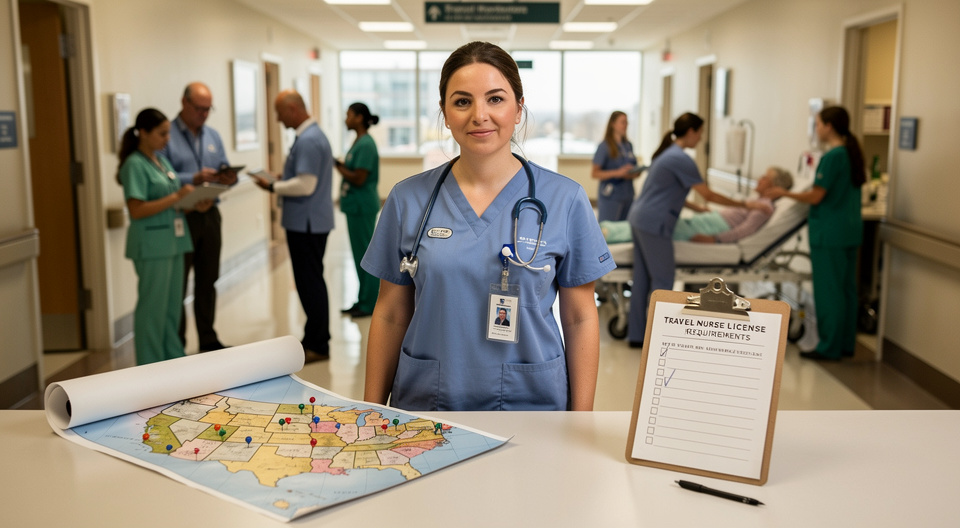
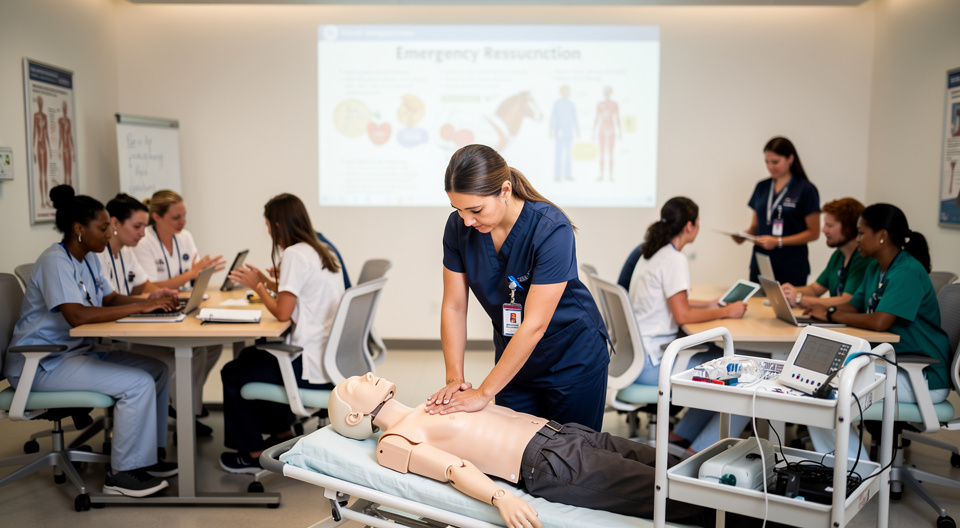

If you’re comfortable caring for patients who need more monitoring than a traditional medical-surgical unit provides but don’t require intensive care, Progressive Care Unit (PCU) nursing could be the right fit for you.
PCU nurses care for patients whose conditions require close observation, advanced clinical skills, and frequent assessment. For experienced nurses interested in travel healthcare, those skills can also open the door to PCU travel nursing opportunities across the country.
Here’s what you should know about working on a Progressive Care Unit and taking your PCU experience on the road.
What Is a Progressive Care Unit?
A Progressive Care Unit provides an intermediate level of care between a general medical-surgical floor and an Intensive Care Unit (ICU).
Patients in a PCU are typically stable enough that they don’t require ICU-level care but still need more frequent monitoring and specialized nursing care than patients on a traditional hospital floor.
Depending on the hospital, you may also hear these units referred to as:
- Step-down units
- Intermediate care units
- Transitional care units
- Telemetry units
The exact patient population and responsibilities can vary by facility, making it important for travel nurses to understand a unit’s expectations before accepting an assignment.
What Does a PCU Nurse Do?
PCU nurses care for patients with a wide variety of medical needs. A typical shift may involve monitoring patients recovering from serious illnesses, surgeries, or intensive care.
Responsibilities can include:
- Performing comprehensive patient assessments
- Monitoring vital signs and changes in patient condition
- Interpreting cardiac telemetry
- Administering medications and IV therapies
- Managing oxygen therapy
- Providing post-operative care
- Coordinating care with physicians and other healthcare professionals
- Educating patients and families
- Preparing patients for transfer or discharge
- Responding quickly when a patient’s condition changes
Because patient conditions can change rapidly, PCU nurses need strong assessment and critical-thinking skills.
What Types of Patients Do PCU Nurses Care For?
Patient populations vary from one facility to another, but PCU nurses may care for patients experiencing or recovering from:
- Cardiac conditions
- Respiratory illnesses
- Major surgery
- Sepsis
- Stroke
- Complex medical conditions
- ICU stays
Some PCUs specialize in areas such as cardiac, neurological, surgical, or respiratory care.
For travel nurses, asking about the unit’s typical patient population during the interview process can help you determine whether an assignment matches your experience.
Essential Skills for PCU Nurses
Successful PCU nurses need a combination of clinical expertise and strong interpersonal skills.
1. Patient Assessment
PCU patients require frequent monitoring. Nurses must be able to identify subtle changes that could indicate a patient’s condition is deteriorating.
2. Cardiac Monitoring
Telemetry is common on progressive care units, so understanding cardiac rhythms and recognizing potentially dangerous changes can be an important part of the role.
3. Critical Thinking
PCU nurses regularly evaluate patient information and determine when additional intervention or escalation may be necessary.
4. Time Management
Caring for multiple higher-acuity patients requires organization and the ability to continuously reprioritize tasks throughout a shift.
5. Communication
Clear communication with physicians, nurses, patients, families, and other members of the care team helps support continuity of care.
6. Adaptability
Patient conditions and priorities can change quickly. PCU nurses must be comfortable adjusting their plans while maintaining safe patient care.
Adaptability becomes even more important for travel nurses who are learning new facilities, workflows, technology, and teams.
PCU vs. ICU vs. Med-Surg: What’s the Difference?
PCU nursing sits between Med-Surg and ICU care.
Med-Surg: Patients are generally more stable and require routine inpatient nursing care.
PCU: Patients require closer monitoring and may have higher acuity or more complex care needs.
ICU: Patients are critically ill and typically require the highest level of monitoring and intervention.
However, unit definitions aren’t identical across hospitals. A PCU at one facility may operate differently from a PCU at another.
That’s why travelers should always review the job description and discuss patient acuity, ratios, equipment, and clinical expectations before accepting a contract.
Can PCU Nurses Become Travel Nurses?
Yes. Experienced PCU nurses can pursue travel assignments at healthcare facilities across the country.
Travel nursing gives PCU nurses an opportunity to bring their clinical experience to facilities experiencing temporary staffing needs while exploring new destinations.
Requirements vary by assignment, but facilities commonly look for nurses with recent experience in their specialty and the appropriate licenses and certifications.
Keeping your résumé, licenses, certifications, references, and skills checklist current can help you move quickly when the right opportunity becomes available.
Why Consider PCU Travel Nursing?
For experienced nurses, traveling can provide opportunities to:
- Work in different healthcare environments
- Expand your clinical experience
- Experience new cities and states
- Build your professional network
- Gain exposure to different hospital systems
- Enjoy greater flexibility in where you work
Every assignment is different, which can make travel nursing especially appealing to nurses who enjoy new experiences and adapting to different clinical environments.
Questions to Ask Before Accepting a PCU Travel Assignment
Before accepting an assignment, consider asking your recruiter or facility:
- What is the typical nurse-to-patient ratio?
- What types of patients are commonly treated on the unit?
- What is the average patient acuity?
- Is telemetry experience required?
- What certifications are required?
- Will I be expected to float?
- What does orientation look like?
- What charting system does the facility use?
Understanding expectations before your first shift can help you determine whether the position aligns with your experience.
Ready to Explore PCU Travel Nursing Jobs?
PCU nursing requires strong assessment skills, adaptability, clinical judgment, and the ability to stay focused in a fast-paced environment. For nurses who thrive between Med-Surg and critical care, it can also provide an exciting path into travel nursing.
Ready to take your PCU experience somewhere new?